

s7 1200 plc manual
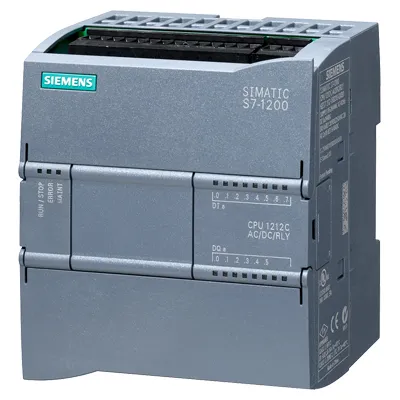
In the world of industrial automation, compact, flexible, and powerful controllers are in high demand. The S7 1200 from Siemens meets all these needs, providing a high-performance solution for machine builders, OEMs, and process engineers. In this article, we’ll explore why the S7 1200 controller is a leading choice and take a detailed look at the S7 1200 PLC price to help you make an informed decision. Compact Power: What Makes the S7 1200 Controller Stand Out Don’t let the size fool you. The S7 1200 controller is a compact but powerful unit that offers integrated PROFINET communication, fast processing speeds, and advanced control functions. It’s designed to handle everything from basic logic operations to real-time motion control and PID regulation. Key features include: High-speed digital inputs and outputs Built-in pulse output (for stepper or servo control) Fast counting capabilities A real-time clock for time-based automation Integrated diagnostics and error detection It’s ideal for small-to-medium automation systems that need precision and speed without the bulk and complexity of a high-end PLC. Scalable and Modular Design of the S7 1200 One of the biggest advantages of the S7 1200 is its modular expandability. You can start small with a basic CPU like the 1211C and scale up as your project grows. Add-on options include: Signal Modules (digital/analog I/O expansion) Communication Modules (RS485, Modbus RTU, etc.) Signal Boards (space-saving internal add-ons) This modular design gives engineers flexibility to adapt the S7 1200 controller to changing needs without overhauling the system. Simplified Programming with TIA Portal and the S7 1200 Controller Programming the S7 1200 controller is seamless using Siemens’ TIA Portal. It supports multiple programming languages—LAD, FBD, and ST—making it user-friendly for different programming backgrounds. Benefits of TIA Portal include: Integrated HMI configuration Easy diagnostics and tag tracing Reusable code blocks and libraries System simulation and test environments This unified platform dramatically reduces development time, especially for complex or iterative projects. Cybersecurity Features of the S7 1200 In today's connected environments, security is critical. The S7 1200 includes: Password-protected access levels Encrypted communications via secure protocols Role-based user management (when used with TIA Portal) These features help protect your system from unauthorized access, making the S7 1200 controller a safe option in networked or cloud-integrated environments. Real-World Applications of the S7 1200 Controller Thanks to its reliability and expandability, the S7 1200 controller is used across various sectors: Packaging – Automated sorting, labeling, and product tracking Food and Beverage – Temperature regulation, batching, and cleaning cycles HVAC Systems – Fan and damper control, energy optimization Water Treatment – Flow monitoring, pump control, and tank level management Building Automation – Lighting systems, alarms, and climate control If your application requires accuracy, flexibility, and a compact footprint, the S7 1200 is often the right tool for the job. Global Support and Long-Term Availability of the S7 1200 Being a Siemens product, the S7 1200 benefits from global availability and long-term service support. Siemens ensures: Worldwide distribution channels Comprehensive user manuals and documentation Localized technical support Ongoing firmware updates and compatibility This support infrastructure lowers the risk of downtime and makes maintenance more straightforward across international operations. A Closer Look at the S7 1200 PLC Price Let’s talk cost. The S7 1200 PLC price varies depending on the CPU model and configuration, but here’s a general range: CPU 1211C : $250–$300 CPU 1212C : $300–$400 CPU 1214C : $400–$600 Add-on signal modules and communication boards may increase the total, but many features come standard—like PROFINET, high-speed counters, and motion control—that competitors often charge extra for. So while the S7 1200 PLC price might appear mid-range, the total value it delivers over the long term is substantial. Lower maintenance costs, reduced engineering hours, and fewer hardware add-ons all translate into better ROI. Total Cost of Ownership with the S7 1200 Controller Buying a controller isn't just about upfront price—it’s about long-term value. The S7 1200 offers: Minimal need for external modules Faster integration thanks to TIA Portal Easy troubleshooting with built-in web diagnostics Reduced downtime through predictive error handling These advantages make the S7 1200 controller a smart investment, not just a purchase. S7 1200 FAQs Q1: What’s the main use of the S7 1200 PLC? A: The S7 1200 is used for small-to-medium automation tasks in industries like packaging, food processing, HVAC, and building automation. Q2: What makes the S7 1200 controller different from the S7 1500? A: The S7 1200 controller is optimized for compact applications with fewer I/O and lower memory needs, while the S7 1500 is better suited for large-scale, high-performance systems. Q 3 : Can the S7 1200 operate in outdoor or harsh conditions? A: It’s designed for industrial use with high tolerance for vibration, temperature fluctuations, and electrical noise—but for outdoor environments, an IP-rated enclosure is recommended. Q4: Can I program the S7 1200 without TIA Portal? A: No. Siemens requires TIA Portal for programming and configuration of the S7 1200 controller . However, the software offers a free trial version for testing and development. Q5: How many devices can the S7 1200 communicate with? A: Using PROFINET, the S7 1200 can connect to multiple devices simultaneously. With communication modules, it supports protocols like Modbus RTU, USS, and CANopen.
We focus on providing one - stop international trade solutions, including product procurement, international logistics, market consulting, and supply chain management services.
vfd controller price
hmi basic panel
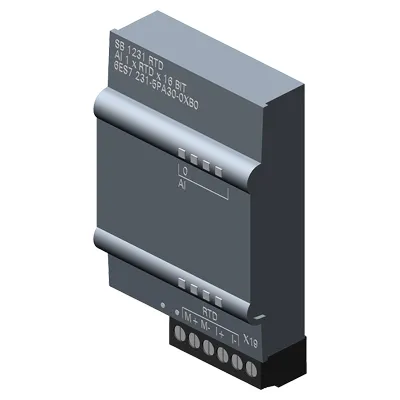
small personal computer
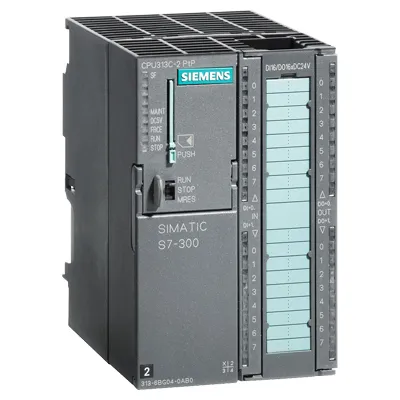
manual book plc siemens s7 300
plc s7 300 training pdf
sinamics g130 g150
6sl3120 1te21 8ac0
We focus on providing one - stop international trade solutions including product procurement, international... logistics market consulting and supply chain management services
-
2026-04-06 01:55
vfd_reverse_rotation
In the realm of industrial automation, vfd manufacturers play a pivotal role in shaping the efficiency, precision, and sustainability of operations worldwide. Variable Frequency Drives (VFDs), also known as AC drives or inverters, are sophisticated power electronics devices that control the speed and torque of AC motors by varying the motor's input frequency and voltage. This comprehensive guide d
-
2026-04-06 01:44
7_point_5_hp_vfd_drive
S120 Rectifier + Inverter As part of the new SINAMICS drive family, the S120 is a high performance inverter that, thanks to its high flexibility, is perfectly suited to meet the increasing requirements for the number and performance of drive system shafts in applications. View Product Details Industry Trends in VFD Technology The global vfd for sale market is projected to reach $27.2 billion by 20
-
2026-04-06 01:44
frequency_motor
Introduction to Variable Frequency Drives from China The global industrial landscape increasingly relies on advanced motor control technologies to optimize energy consumption, enhance operational precision, and extend equipment lifespan. At the forefront of this technological shift are Variable Frequency Drives (VFDs), critical components for managing AC motor speed and torque. China has emerged a
Call Us or Fill the Form
- +8613821343088 +8613603111169
- xudong.an@tianjingyongkai.com
-
Room 1 - 543, Building E, Zhonghui Xiyuan Plaza, Central Business District, Binhai, Tianjin